The straightforward answer: No scientific studies support claims that sapphires alter human energy fields. Any described energy changes tend to stem from psychological associations and personal symbolism, much like feeling focused when wearing lucky socks or calm when surrounded by a favorite color – not measurable physical properties.

Picture this: You're trying on anniversary jewelry when the sales associate shares how a client swears sapphires "shift her energy." Later, scrolling online, every third listing promises stones that "harmonize your aura." It’s tempting to wonder – could that Ceylon blue really center you? This confusion between poetic description and scientific reality is exactly why we’ve crafted a practical checklist. We’ll unpack common beliefs through tangible characteristics like inclusion patterns and light behavior, separating folklore from verifiable traits. By the end, you’ll know what actually deserves your attention.
Many believe sapphires emit measurable energy interacting with our biology. Picture your friend insisting her ring "grounds" her during stressful meetings. The reality? No peer-reviewed physics or physiology studies confirm gemstones affect human biofields. What we can measure: light refraction, chemical composition, and scratch resistance – all testable with basic gemological tools.
Chemically identical to rubies apart from trace elements, sapphires consist of aluminum oxide crystalline structures. At atomic level, they're inert – corundum ranks 9 on the Mohs hardness scale due to dense molecular bonds, not mystical vibrations.
Imagine choosing a yellow sapphire expecting instant vitality – after all, marketing claims hue directly impacts energy. But scientific color psychology reveals cultural conditioning shapes these responses. Blue might evoke ocean serenity for coastal dwellers while symbolizing sorrow elsewhere. So yes, your sapphire’s color may trigger associations – but it’s not charging your cells.
Titanium traces create classic blues, while iron influences golden tones. Color-change varieties shift from blue to violet under incandescent light due to vanadium concentrations, measurable with spectrometry. Since 95% of vibrant blues achieve saturation through heat treatment, even "emotional" colors often link to human enhancement.
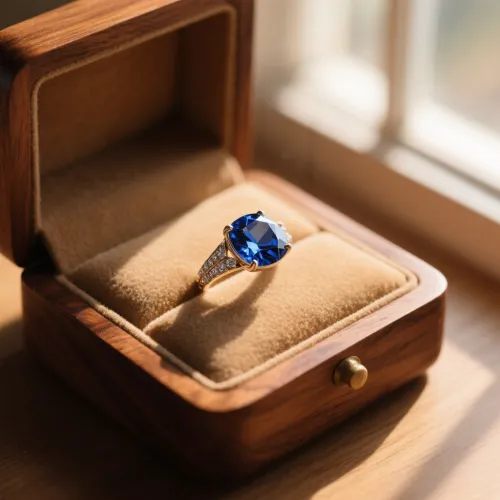
Some enthusiasts claim only natural stones hold "authentic energy." Consider holding two identical blue sapphires – one heated, one untouched. Reality? Heat treatment at extreme temperatures permanently aligns mineral structures for improved clarity without altering chemical composition. Perceived "purity" differences relate to rarity valuation, not mystical properties.
Natural sapphires require millions of years forming in igneous/metamorphic environments under searing heat and pressure. When mined, nearly all show inclusions reducing visual appeal. Precision heating removes veil-like fractures and intensifies color saturation efficiently.
While composition stays identical, care varies: Avoid ultrasonic cleaners for fracture-filled stones since vibrations can reopen fissures. Confirm treatment via UV fluorescence – some untreated sapphires glow orange reaction whereas heated stones remain inert.
Kashmir sapphires fetch premium prices partly due to myths about unique "geological energy." Trace elements do vary by location – Ceylon stones often show titanium dominance while Montana specimens display iron richness. But these affect visible color quality and collector markets, not measurable human interaction.
Mineral fingerprints differ: Kashmir sapphires tend toward milky blue with reduced brilliance tradeoffs, while Australian parti sapphires display multi-color zonation from shifting trace elements during formation. These create aesthetic distinctions enthusiasts value.
Brighter untreated blue saturation often corresponds with visible inclusions. Larger sizes exponentially increase rarity but highlight color zoning. Precision cutting maximizes brilliance yet risks exposing crown inclusions concealed by rounded cuts.
"Bigger stones emanate stronger energy" – you've heard this at gem shows. While carat weight impacts price multipliers, size influences light refraction intensity. A 5-carat sapphire creates more prominent asterism (starlight patterns from rutile alignments) than smaller counterparts simply through surface area physics.
Choose higher crown angles to maximize brilliance in pale large sapphires but select shallower pavilions for dark tones to avoid extinction (light loss). Bezel settings better protect shallow-cut engagement stones vulnerable at pavilion edges.
Realistically assessing sapphires means prioritizing observable physics over poetic claims. Next time you visit a jewelry counter or open that velvet box: First, recall color responses are psychological – not vibrational. Second, check treatment disclosures since heating enhances appearance but removes diagnostic inclusions. Third, examine cut quality: poorly angled facets dim brilliance regardless of origin tales. Staying grounded in these checks transforms sapphire appreciation from mystic guessing into informed admiration.
When you slip one on tomorrow, what physical properties become your focus rather than promised energies?
Q: Why do some sapphires appear milky?
A: Milky appearances often indicate abundant microscopic inclusions scattering light – Kashmir sapphires trade clarity for velvety blues. Heat treatment can sometimes resolve this.
Q: Do synthetic sapphires have different light properties?
A: Laboratory-created sapphires share identical optical and physical qualities with mined counterparts since both are aluminum oxide crystalline structures.
Q: Can cutting orientation affect durability?
A: Directional toughness means certain crystal planes may show abrasions earlier despite high hardness overall. Quality faceting mitigates this.
Q: How should high-wear sapphire jewelry be maintained?
A: Professional cleaning every 6-12 months prevents accumulated grime; always specify fracture-filled stones need gentle methods.
Q: What creates padparadscha’s salmon hue?
A: Precise iron-chromium interactions tint corundum peach-pink; these concentrations differ by mine, causing color variations between sources.


$
